Choose the Right Supplier by Supplier Audit
Choosing the right supplier is about more than price and delivery times. A supplier audit helps buyers evaluate whether a manufacturer or vendor can consistently meet quality, compliance, and operational expectations. Whether you’re sourcing locally or internationally, conducting a supplier audit reduces risk, protects your brand, and builds stronger business relationships.
In this guide, we’ll cover what supplier audits are, why they matter, and the key areas every buyer should evaluate before approving a supplier.
Read more like this How to Choose the Right Casting Supplier in India: Complete Buyer’s Guide
What Is a Supplier Audit?
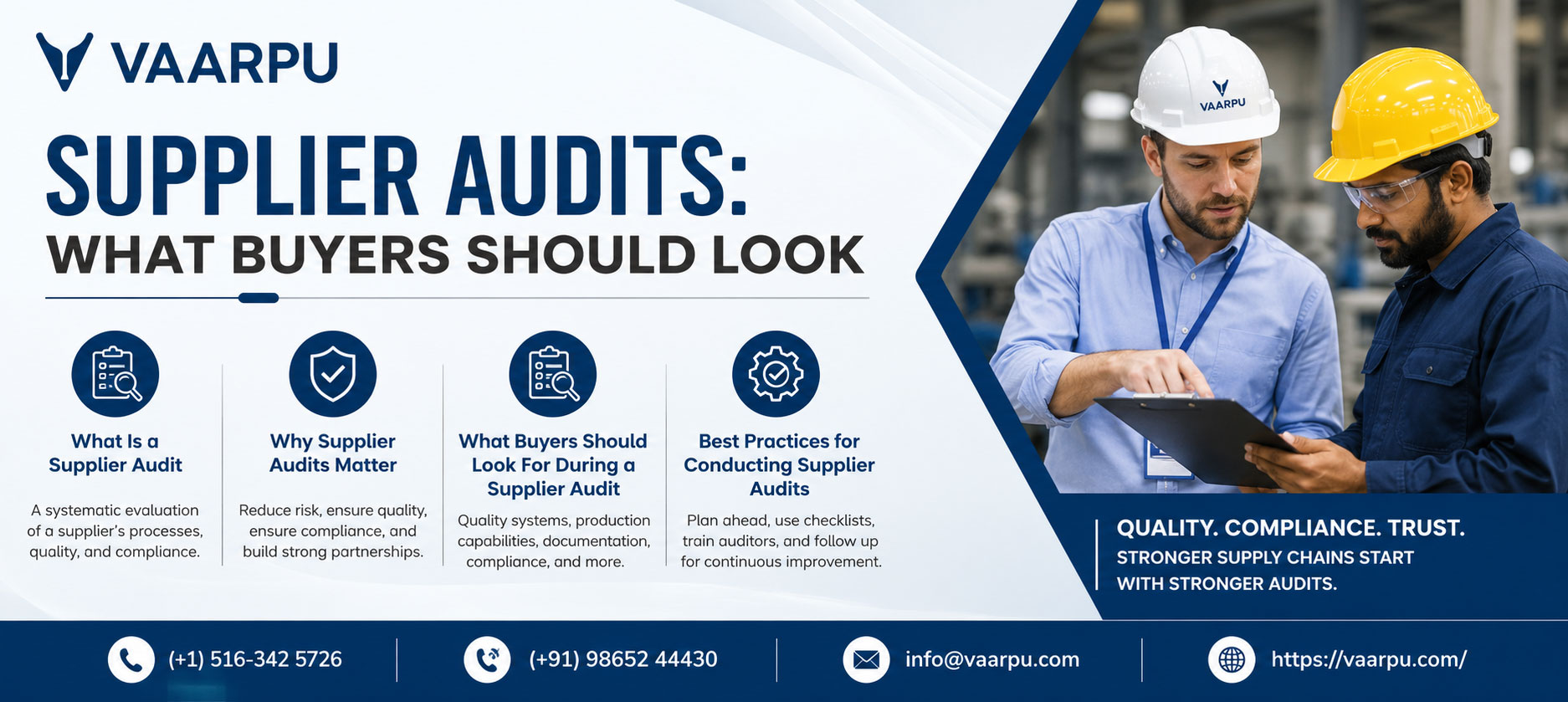
A supplier audit is a systematic assessment of a supplier’s operations, processes, and management systems. The goal is to determine whether the supplier has the capability to consistently produce products or services that meet your specifications and regulatory requirements.
Supplier audits may be conducted:
- Before selecting a new supplier
- During supplier qualification
- As part of ongoing supplier performance monitoring
- After quality issues or customer complaints
- To verify compliance with industry regulations
Why Supplier Audits Matter
Supplier audits help businesses:
- Reduce quality risks
- Ensure regulatory compliance
- Verify manufacturing capabilities
- Improve product consistency
- Prevent supply chain disruptions
- Identify improvement opportunities
- Strengthen long-term supplier relationships
For industries such as automotive, medical devices, aerospace, electronics, food, and pharmaceuticals, supplier audits are often an essential part of quality management.
Read more like this Why India is becoming a Global Hub for Casting Manufacturing
What Buyers Should Look For During a Supplier Audit?
-
Quality Management System (QMS)
The first area to review is whether the supplier has a documented quality management system.
Check for:
- Quality manuals and procedures
- Document control systems
- Corrective and preventive action (CAPA) processes
- Internal audit records
- Continuous improvement initiatives
- Certifications such as ISO 9001 or industry-specific standards
A well-managed QMS demonstrates that the supplier follows standardized processes instead of relying on informal practices.
-
Manufacturing Capability
Buyers should verify whether the supplier has the equipment, technology, and expertise needed to manufacture products consistently.
Evaluate:
- Production capacity
- Machine condition and maintenance
- Process controls
- Automation levels
- Tooling management
- Production planning systems
Ask whether the supplier can scale production if demand increases.
-
Product Quality Control
Inspect how quality is maintained throughout production.
Review:
- Incoming material inspections
- In-process inspections
- Final product testing
- Sampling procedures
- Inspection records
- Calibration of measuring equipment
Consistent inspection processes reduce the likelihood of defective products reaching customers.
-
Supplier Certifications
Industry certifications provide additional confidence that a supplier follows internationally recognized standards.
Common certifications include:
- ISO 9001
- ISO 14001
- ISO 45001
- IATF 16949
- AS9100
- GMP certification
- HACCP
- BRCGS
Always verify that certificates are current and issued by accredited certification bodies.
-
Regulatory Compliance
Ensure the supplier complies with regulations relevant to your industry and target markets.
Examples include:
- Environmental regulations
- Product safety requirements
- Import/export regulations
- Labor laws
- RoHS
- REACH
- FDA requirements (where applicable)
Non-compliance can lead to product recalls, legal penalties, and reputational damage.
-
Facility Conditions
A clean, organized facility often reflects disciplined operational management.
Observe:
- Housekeeping
- Material storage
- Equipment organization
- Safety signage
- Employee workstations
- Waste management
- Environmental controls
Poor facility management can indicate broader operational issues.
-
Supply Chain Stability
Understanding a supplier’s supply chain helps identify potential vulnerabilities.
Assess:
- Raw material sourcing
- Approved supplier lists
- Inventory management
- Backup suppliers
- Lead time consistency
- Risk management plans
Suppliers with diversified sourcing strategies are generally more resilient during disruptions.
-
Employee Competence
Employees play a critical role in maintaining product quality.
Review:
- Training records
- Skill certifications
- Operator qualifications
- Safety training
- Employee turnover rates
Well-trained employees are more likely to produce consistent, high-quality products.
-
Traceability Systems
Traceability enables products to be tracked from raw materials through final delivery.
Verify:
- Batch identification
- Lot tracking
- Material traceability
- Production records
- Recall procedures
Effective traceability is essential for managing recalls and investigating quality issues.
-
Corrective Action Process
Ask how the supplier handles defects and customer complaints.
Review:
- Root cause analysis methods
- CAPA documentation
- Response timelines
- Preventive measures
- Effectiveness verification
Strong corrective action systems help prevent recurring problems.
-
Delivery Performance
Reliable delivery is just as important as product quality.
Evaluate:
- On-time delivery rates
- Order accuracy
- Shipping processes
- Packaging quality
- Logistics capabilities
- Emergency response procedures
Late deliveries can disrupt your production schedule and affect customer satisfaction.
-
Financial Stability
A financially healthy supplier is less likely to experience production interruptions.
Consider:
- Business longevity
- Growth trends
- Customer diversification
- Investment in equipment
- Expansion plans
Financial instability can increase the risk of supply chain disruptions.
-
Cybersecurity and Data Protection
As supply chains become increasingly digital, buyers should also evaluate information security.
Look for:
- Secure IT systems
- Data backup procedures
- Access controls
- Cybersecurity policies
- Protection of customer data
- Secure communication practices
This is especially important when suppliers handle confidential product designs or intellectual property.
Read more like this Types of Cast Iron: Complete Guide to Properties, Grades, Applications & Differences
Questions Buyers Should Ask During an Audit
Some useful questions include:
- How do you control product quality?
- What certifications do you currently maintain?
- How do you manage customer complaints?
- What happens if production equipment fails?
- How do you qualify your own suppliers?
- How do you train new employees?
- What is your average on-time delivery rate?
- How do you handle product recalls?
- What continuous improvement initiatives are currently underway?
The answers can reveal how mature and proactive the supplier’s management systems are.
Warning Signs During a Supplier Audit
Watch for these potential red flags:
- Poor documentation
- Inconsistent quality records
- Frequent equipment breakdowns
- Untrained staff
- High employee turnover
- Expired certifications
- Poor housekeeping
- Lack of traceability
- Unwillingness to share information
- Repeated customer complaints
These issues may indicate higher operational or quality risks.
Best Practices for Conducting Supplier Audits
To maximize the value of supplier audits:
- Use a standardized audit checklist.
- Review documentation before visiting the facility.
- Interview personnel from different departments.
- Observe production processes directly.
- Document findings with evidence.
- Assign corrective actions with deadlines.
- Conduct follow-up audits to verify improvements.
- Score suppliers consistently for easier comparison.
Read more like this Advantages of Cast Iron: Why It Remains the Preferred Material for Modern Engineering
Final Thoughts
Supplier audits are a critical tool for reducing supply chain risk and ensuring consistent product quality. By evaluating quality systems, manufacturing capabilities, compliance, operational processes, and overall business stability, buyers can make more informed sourcing decisions.
Rather than viewing supplier audits as a one-time qualification exercise, businesses should integrate them into an ongoing supplier management strategy. Regular audits encourage continuous improvement, strengthen partnerships, and help ensure that suppliers continue to meet evolving quality and compliance expectations.
Looking for a Reliable Casting Supplier in India?
Partner with Vaarpu, a trusted ISO Certified manufacturer of high-quality cast iron castings for industries that demand precision, consistency, and dependable delivery. Whether you need custom castings, production support, or expert engineering assistance, Vaarpu is ready to help you meet your manufacturing goals. Contact the team today to discuss your project requirements and request a customized quote.